Digital Vision Board vs Paper: Which One Sticks?
Digital boards are convenient. Paper boards feel real. Neither turns a vision into a plan. An honest comparison and the fix to make either format work.
TL;DR: Digital vision boards follow you everywhere. Paper boards feel more real. The debate between the two misses the real question, which is whether either format actually produces a plan. Digital wins on convenience, daily visibility, and easy updates. Paper wins on tactile engagement, freedom from distraction, and the commitment from hands-on effort. Both share the same blind spot: a board shows the destination but not the route.
The honest answer is that both digital and paper vision boards work for visualization, and neither works for execution. A digital board set as your phone wallpaper gets seen dozens of times a day, which reinforces your goals through repeated exposure. A paper board pinned above your desk creates a tangible focal point that grounds your intention every time you look up from work.
But the mechanism that actually moves you toward a goal is not the number of times you see an image. It is having a clear sequence of steps from where you are to where you want to be. A 2017 study in Psychological Science (Park, Lu, and Hedgcock) found that people who planned backward completed more tasks and reported greater motivation, higher goal expectancy, and less time pressure than forward planners. Backward planning is the active ingredient. The vision board format is the delivery method.
Digital vs Physical: The Honest Comparison
| Factor | Digital Vision Board | Paper Vision Board |
|---|---|---|
| Daily visibility | High. Phone wallpaper, seen throughout the day | Low to medium. Seen when you enter the room |
| Update ease | Easy. Swap images in minutes | Difficult. Requires rebuilding or overwriting |
| Portability | Everywhere. On your phone, laptop, tablet | Fixed. One location, usually a wall |
| Distraction risk | High. Lives inside the same device as notifications | None. No notifications, no scrolling |
| Creation process | Fast, drag-and-drop, templates available | Slow, tactile, requires materials |
| Emotional connection | Lower. Fast creation, less effort invested | Higher. Hands-on effort builds attachment |
| Privacy | Private. Only you see it | Visible to anyone who enters the room |
| Produces a plan | No | No |
The table makes the trade-offs clear. Digital boards are convenient and visible. Paper boards are grounding and distraction-free. But on the question that actually matters, both columns say the same thing. Neither format structures the steps.
The Shared Blind Spot
A vision board, whether digital or physical, is a collection of outcomes. The beach house photo. The van conversion picture. The screenshot of a bank account balance. Each image represents a result, not a route. This is a limitation of the format, not a flaw in your execution. Boards are designed to display, not to sequence.
The research backs this up. Visualization increases motivation, but motivation without a plan fades. Backward planning is what turns the motivation into action. Our post on why vision boards fail covers this mechanism in depth. And our vision board vs action board comparison shows how adding a plan to a board changes the outcome.
A Real Example: The Same Goal in Both Formats
Imagine a picture of a coastal town is on your board. You want to live by the sea for half the year. It is the kind of dream that ends up on both digital and paper boards.
Here is what the backward plan looks like as a tree in GoalBranch:
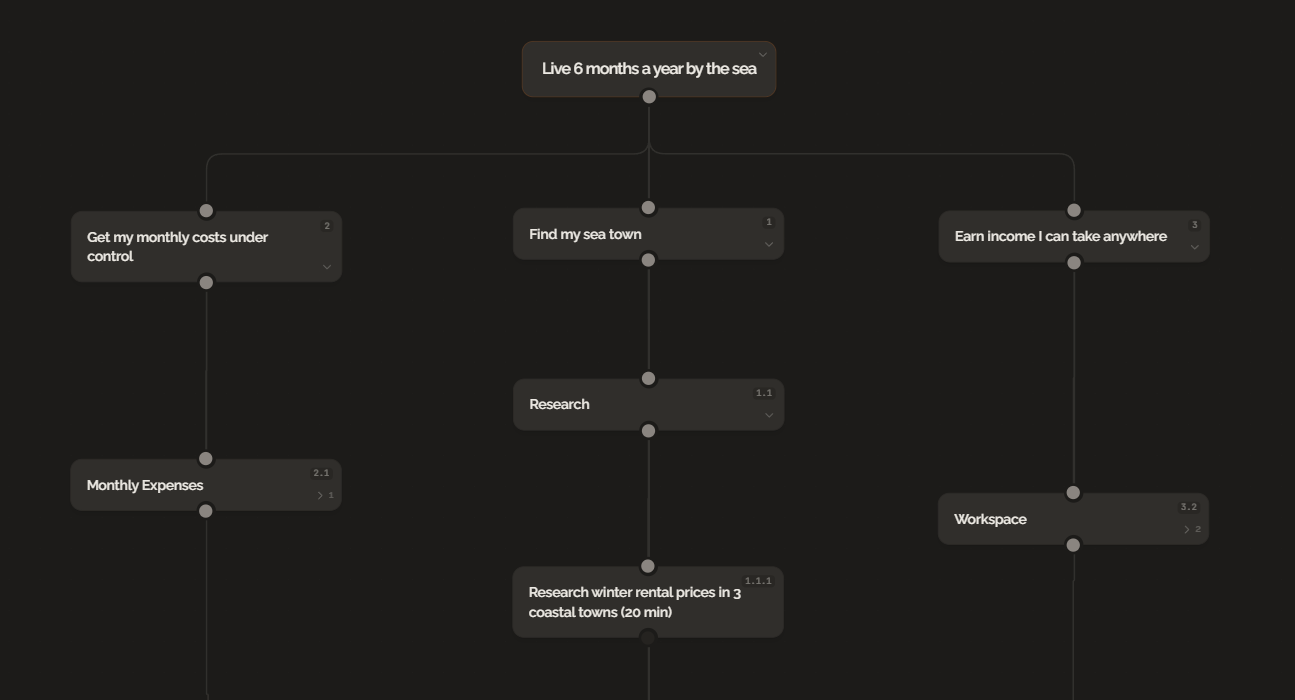
The root goal sits at the top. Three main milestones branch beneath it: earn income that works from anywhere, find the right coastal town, and get monthly costs low enough to sustain the lifestyle. Each milestone has its own sub-steps. The "find my sea town" branch breaks into a list of candidate towns, a visit to each, cost of living comparisons, and a final pick.
The first step is "research winter rental prices in three coastal towns." It takes about 20 minutes. That is the actual distance between a vision board image and real action, whether the image is on a phone wallpaper or a poster board.
This kind of tree is what makes a vision board actionable. You can make the board in digital format or paper format, whichever you prefer. Then you add the backward plan. For a closer look at how the best tools compare on execution, see our best digital vision board tools roundup.
The Fix: Keep the Format You Prefer, Add the Plan
The debate between digital and paper is a distraction from the real question. Both formats serve the same purpose: they help you clarify what you want. That clarity is valuable, and you should use whichever format makes you engage with your goals more consistently.
The missing piece is not the format. It is the absence of a backward plan attached to each image. Pick one goal from your board. Write it at the top. Work backward until you find the step you can take this week. That chain turns the image into a sequence of real tasks, and it works regardless of whether the image is pixels or paper.
If you want to skip the manual chain and generate yours automatically, type your goal into GoalBranch and see your first step in 60 seconds.
The Bottom Line
Digital boards and paper boards both help you see where you want to go. Neither helps you plan how to get there. The format you choose matters far less than whether you attach a backward plan to the images on it. Pick one goal from your board, work backward from it until you find the step that fits this week, and take it.
FAQ
Is a digital vision board more effective than a physical one?
Digital boards offer more daily exposure as phone wallpapers and are easier to update. Physical boards create a deeper emotional connection through hands-on creation. Neither format produces a plan, so effectiveness depends on whether you pair the board with actionable steps.
What are the main advantages of a paper vision board?
Paper boards involve a tactile creation process that deepens emotional connection. They have zero distraction risk since there are no notifications competing for attention. The effort required to make one increases personal commitment. The downside is they are fixed in one location and difficult to update.
What are the main advantages of a digital vision board?
Digital boards travel with you on your phone or laptop. You can update them instantly as your goals change. They work as phone wallpapers for repeated daily exposure, which reinforces goal visibility. The downside is they compete with notifications, social media, and other screen distractions.
Which vision board format actually helps you reach your goals?
Neither format produces a plan on its own. Both show the destination without mapping the route. A 2017 study found that backward planners completed more tasks and reported greater motivation and higher goal expectancy than forward planners. The best approach is to make a vision board in whichever format you prefer and then attach a backward plan to each image.
Ready to try backward planning on your own goals?
Start planning freeMore guides
Best Goal Planning Apps in 2026 (Free and Paid)
From free habit trackers to AI goal planners, here are the best goal planning apps in 2026 compared by features, pricing, and what they help you do in detail.
5 Tools for Building a Goal Tree (From Whiteboard to App)
A goal tree turns your ambition into a dependency map. Compare five tools for building one, from a whiteboard to apps that generate the tree automatically.